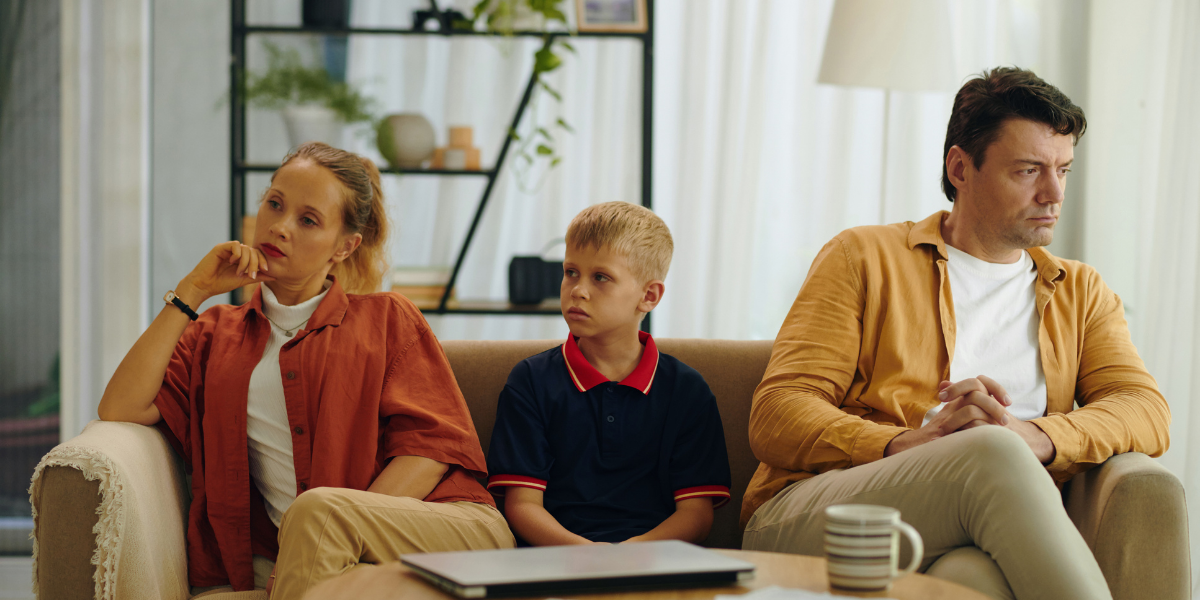
How to Navigate Divorce: 6 Areas That Change During the Process


Nobody really knows how to get divorced.
You suddenly find yourself in one, being asked to make decisions about money, your home, your children, your future, and sometimes about a person you may still love, or may be deeply hurt by, or may barely recognize anymore. All while trying to get through a normal Tuesday.
You still have to answer emails. Make dinner. Show up for work. Get the kids where they need to go. Sleep, somehow. And in between all of that, you’re supposed to understand legal documents, make financial decisions, respond thoughtfully to your former partner, and make choices that may shape the next decade of your life.
Divorce will ask you to make some of the biggest decisions of your life in a season where you may have the least emotional capacity to make them.
Maybe you knew divorce would be hard. But you may not have known it would be hard in so many different ways at the same time.
From the outside, divorce can look straightforward. You file. You sign some papers. You separate the assets. You decide who lives where. If you have children, you create a parenting plan. Eventually, the divorce is final.
But when you’re the one living it, you realize pretty quickly: divorce is not paperwork. It’s a life coming apart and reshaping itself at the same time. And the coming apart rarely leaves the clean edge you might expect from a paper cutter. It is more like the fabric of your life being torn apart, leaving edges that are frayed, uneven, and still holding threads of what used to be connected.
It happens when you open an email from your attorney and feel your stomach drop. When you look at your bank account and realize the numbers mean something different now. When you're desperate for a break and then find the quiet of your kids not being in the house is disorienting.
This is why divorce can feel so difficult to get your arms around. Because it isn’t one divorce. It’s six.
There’s the emotional divorce. The physical divorce. The social divorce. The financial divorce. The parental divorce. And the legal divorce.
They overlap. They collide. And they rarely move at the same pace.
Understanding the six realms of divorce can help you make sense of what you're experiencing. Not because it makes divorce simple, but because sometimes when everything feels urgent, being able to name what kind of hard this is can help you figure out what actually needs your attention and what can wait.
So let’s take this enormous thing called divorce and look at what you’re actually navigating one realm at a time.
The Emotional Realm
Divorce is loss. Even when it's what you wanted or felt was the best decision for you.
You may grieve your spouse. Your family. Your home. Your routines. Your traditions. The future you thought you were going to have. And you may feel relief, too. Sometimes both happen on the same day.
But the emotional work of divorce goes deeper than grief. Divorce can shake your sense of who you are and what you trust. You may question decisions you made years ago. You may wonder how you got here, what you missed, or whether you can trust yourself to make good decisions now. You may be trying to separate what happened in your marriage from what you believe about yourself because of it.
That is a lot to carry, especially when the rest of your life still expects you to function.
You might feel strong in the morning and fall apart at night. You might be certain you've moved forward and then find yourself unexpectedly devastated by something small.
I remember standing at the stove one evening when my son opened the garage door to take out the trash. It was 5:30, about the time I was used to hearing that door open when his father came home. For years, that sound had meant something familiar: he was home. I suddenly burst into tears with the realization, I'm never going to hear that sound the same way again.
Sometimes grief arrives like that. Not in the big moments you expect, but in an ordinary sound at the end of an ordinary day.
There is no straight line through grief. A hard day is not evidence that you are back at the beginning. It may simply mean that something hurts today. The work here isn't to “get over” your marriage as quickly as possible. It's to give yourself somewhere safe enough to tell the truth about what happened, what you lost, what you're angry about, what you miss, what you're relieved to leave behind, and what you're afraid comes next.
That may mean letting a trusted friend see more of what you're carrying. It may mean setting boundaries with people who want details you don't want to give. And it may mean finding a therapist who can sit with you in the mess of it, not to tell you how you should feel, but to help you understand what you're feeling and begin to trust yourself again.
You need a place where you don't have to be okay. Especially if you're spending the rest of your day being okay for everyone else.
Healing means you gradually learn how to carry what happened without letting it determine what happens next.
The Physical Realm
Divorce changes the physical shape of your life.
Where you live. Where your children sleep. What stays in the house and what leaves. The closet that suddenly has empty space. The family photos you don't quite know what to do with yet.
And then there are the logistics of simply living differently.
Maybe you're moving into a new home. Maybe you're staying in the same one, but it doesn't feel like the same home anymore. You may suddenly be responsible for things your spouse always handled. The kids may be moving between two houses. Even ordinary routines may have to be rebuilt.
I recall a client grieving the realization that she had to find a new grocery store. All the familiar places: where she normally got her gas, where she grabbed her coffee, where she dropped her mail, all had to be rediscovered around her new home. These can seem like small things compared to custody agreements, finances, or the end of a marriage. They're not. Our spaces hold our lives, and when those spaces change, we feel it.
The physical realm of divorce is the work of leaving one version of your life behind while creating the spaces and rhythms for whatever comes next, even when so much of your life still feels unsettled.
So start with what is immediately around you.
Close some of the gaps that have become tangible reminders of what is gone. Move your clothes around in the closet instead of leaving one side empty. Use both sides of the vanity. Spread out. Rearrange the furniture.
Give yourself permission to change things. Not because changing your surroundings changes what happened, but because there is something grounding about beginning to make your physical life your own again.
The Social Realm
One of the less-discussed parts of divorce is how much it can change your social world.
Friendships may shift. Couples you spent time with may become harder to see. Family relationships can get complicated. Invitations may change. People may take sides or work so hard not to take sides that they disappear altogether. You may walk into a room you've been in a hundred times and suddenly wonder where you fit.
Because for a long time, you may have belonged to the world as part of an us. Now you're figuring out who you are socially as a me again.
And that can be surprisingly lonely.
Sometimes the hardest part isn't actually losing people. It's discovering that people you expected to show up don't know how to be with you in this season.
Some won't know what to say. Some will want details you don't want to share. Others may rush to reassure you or tell you what they think you should do when what you really need is someone willing to sit beside you and acknowledge that this is hard.
Try not to assume every awkward interaction means someone doesn't care. People are often uncomfortable with pain they don't know how to fix.
Pay attention to the people who stay.
The friend who sits with you without trying to solve everything. The person who remembers the court date and texts you afterward. The person who can make you laugh when you desperately need it. The person who reminds you that you are still you.
And you may have to help them know how to help you.
Tell someone you need company, not advice. Ask a friend to have dinner with you on a night you know will be hard. Find people who understand divorce because they've lived it. You don't need everyone to understand what you're going through. You need a few people with whom you don't have to pretend you aren't going through it.
Build new relationships. Not every person who belongs in your next chapter has to come from the last one.
The Financial Realm
Money can become one of the most emotional parts of divorce.
There may be a house, retirement accounts, bank accounts, debts, insurance, taxes, child support, spousal support, and a long list of financial questions you may never have expected to answer on your own.
But underneath all those numbers is often a much bigger question: “Am I going to be okay? Can I actually build a life from here?”
Because during divorce, money isn't just money. It can represent safety. Independence. Choices. Where you'll live. What you can provide for your children. Whether the life you imagined for yourself is still possible.
Maybe you haven't managed the finances before. Maybe your spouse handled the investments, taxes, or bills and you're embarrassed by how much you don't know. Maybe you've always been financially independent, but the math looks very different when one household becomes two.
Financial uncertainty can make an already uncertain season feel even less safe. And when you're scared, it's easy to avoid the numbers altogether or feel like you have to solve your entire financial future right now.
You don't.
The goal isn't to have your financial future figured out. The goal is to get enough clarity about where you are to make the next good decision.
Start with what you know and get help understanding what you don't. Gather the statements. Understand what you own and what you owe. Know what it actually costs to live your life. Ask the questions that feel basic. Ask them twice if you need to.
Getting help isn't evidence that you aren't capable. In fact, it may be one of the most capable things you can do.
You may not like every answer you find. But clarity gives you something fear doesn't: a place to begin.
The Parental Realm
When children are involved, you aren't only navigating your own divorce. You're helping your children navigate a change they didn't choose and may not fully understand.
And you're being asked to do that while you are hurting.
That's one of the hardest tensions of parenting through divorce. Your own life may feel uncertain, and at the same time, you're trying to create a sense of safety and predictability for your children. You may be grieving the loss of your family as you knew it while trying to reassure them that they still have one.
Your marriage may be ending. Your family is changing. But you are still their parent.
Your children don't need you to convince them that everything is fine. They need to know that they are loved, that the divorce isn't their fault, and that they are not responsible for taking care of either parent.
They need permission to love both of you. To miss the other parent when they're with you. To have fun at the other house without worrying that it will hurt your feelings. To be angry about the divorce. And sometimes, to not want to talk about it at all.
Your child's experience of the divorce belongs to them. It may look very different from yours. You can't make divorce painless for your children, but you can work to make it safer.
Keep them out of the middle of adult conversations and decisions. Don't ask them to carry messages between parents or manage information they aren't old enough to hold. Be careful about making them your confidantes, even when they seem mature enough to understand. And as difficult as it may be, try to separate what you feel about your former spouse from your child's relationship with their other parent, when it is safe to do so.
There will be moments when you don't get this right. You may say too much. React when you wish you hadn't. Get frustrated. Have a hard handoff. Cry in front of your kids.
Parenting through divorce does not require you to become perfectly composed. Your children don't need a perfect parent. They need a parent who keeps coming back to safety, connection, and repair.
Your job isn't to make sure your children never hurt because of the divorce. You can't take all of that hurt away. But you can help them know they don't have to carry it alone, and you can be careful not to ask them to carry yours, too.
That means finding other adults who can hold the parts of your experience that your children shouldn't have to. Giving your pain somewhere else to go is one of the most important ways you can keep it from becoming theirs.
The Legal Realm
The legal side of divorce can feel like entering a world you never wanted to understand.
There are documents you don't recognize. Deadlines you didn't know existed. Decisions about property, retirement accounts, support, parenting, and your future. There are attorneys, mediators, court dates, agreements, and sometimes a language that seems designed for people who already know how divorce works.
And you're supposed to navigate all of this during a season when your capacity may already be stretched thin. So it makes sense that you might want someone else to just handle it.
There are professionals who can help carry the legal complexity. Let them. Get good legal advice.
But don't hand them ownership of your divorce.
That doesn't mean becoming an expert in family law or fighting over everything. It means staying present in a process that will shape your life after the professionals have gone home.
Know where things stand. Read what you're being asked to sign. Ask what you don't understand, even if you've already asked once. Understand the choices in front of you and the consequences of those choices. And when you're unsure, slow down long enough to ask, What does this actually mean for my life?
There may be parts of your divorce you cannot control. You cannot control how your former spouse behaves or the pace of the legal system.
But you can stay engaged.
Your attorney can explain the law, help you understand your options, advocate for you, and tell you what they recommend. But they don't have to live with the agreement when the case is over.
You do.
If you've been avoiding this part because it feels overwhelming, don't try to tackle the whole legal process today. Open the email. Gather the document. Write down the questions. Make the call.
Own the next step. Then take it.
you will move in and out of all six realms
You will not move through these six realms in order.
There is no checklist. You don't finish the emotional realm and move on to the financial one. You don't sign the legal documents and suddenly feel emotionally finished.
You will move in and out of these realms throughout your divorce. Sometimes several will demand your attention at once. And sometimes you'll find yourself back in a realm you thought you had already worked through.
That's why knowing where you are matters.
When everything gets lumped together as the divorce, everything can feel equally big, equally urgent, and equally impossible to solve.
But maybe today isn't about your whole divorce.
Maybe today is financial. Maybe it's parental or legal. Maybe there isn't a decision to make at all. Maybe today is emotional, and what you need isn't another answer. It's some space to feel what you're feeling.
Ask yourself: “What realm am I in right now?” Then: “What does this part need from me?”
And when you find yourself returning to a realm you thought you had already moved through, that doesn't mean you're going backward. Divorce isn't linear because your life isn't divided neatly into six separate parts. Neither is your healing.
Revisiting a realm doesn't mean you're back at the beginning. It means something in that part of your life needs your attention again. You don't have to navigate every realm perfectly. You just have to keep showing up for your life.
Because divorce isn't simply about ending a marriage. It's about learning how to build a life you can live in again.
If you're in the middle of a divorce and need a place to make sense of what you're carrying, find your footing, and figure out what comes next, I would be honored to walk alongside you. Sometimes the next step is simply having someone there. In Texas, you can reach out to me at Lifeologie Counseling Allen at (214) 556-0996. Or, to find a Lifeologie Counseling provider near you who specializes in helping people work through divorce, loss, or grief, visit our locations page, search out therapist directory, or choose “request an appointment” in the yellow button on the top right of this page.

About Heather Williams Dutcher
Heather’s passion is to come alongside individuals, couples, and families through the beautiful mess we call life. If you are wrestling with how you relate to yourself - shame, identity, anxiety, depression, or wrestling with how you relate to others - marital, parenting & co-parenting, family dynamics, communication - you don't have to go it alone.
Meet Me